
OVERVIEW

Research

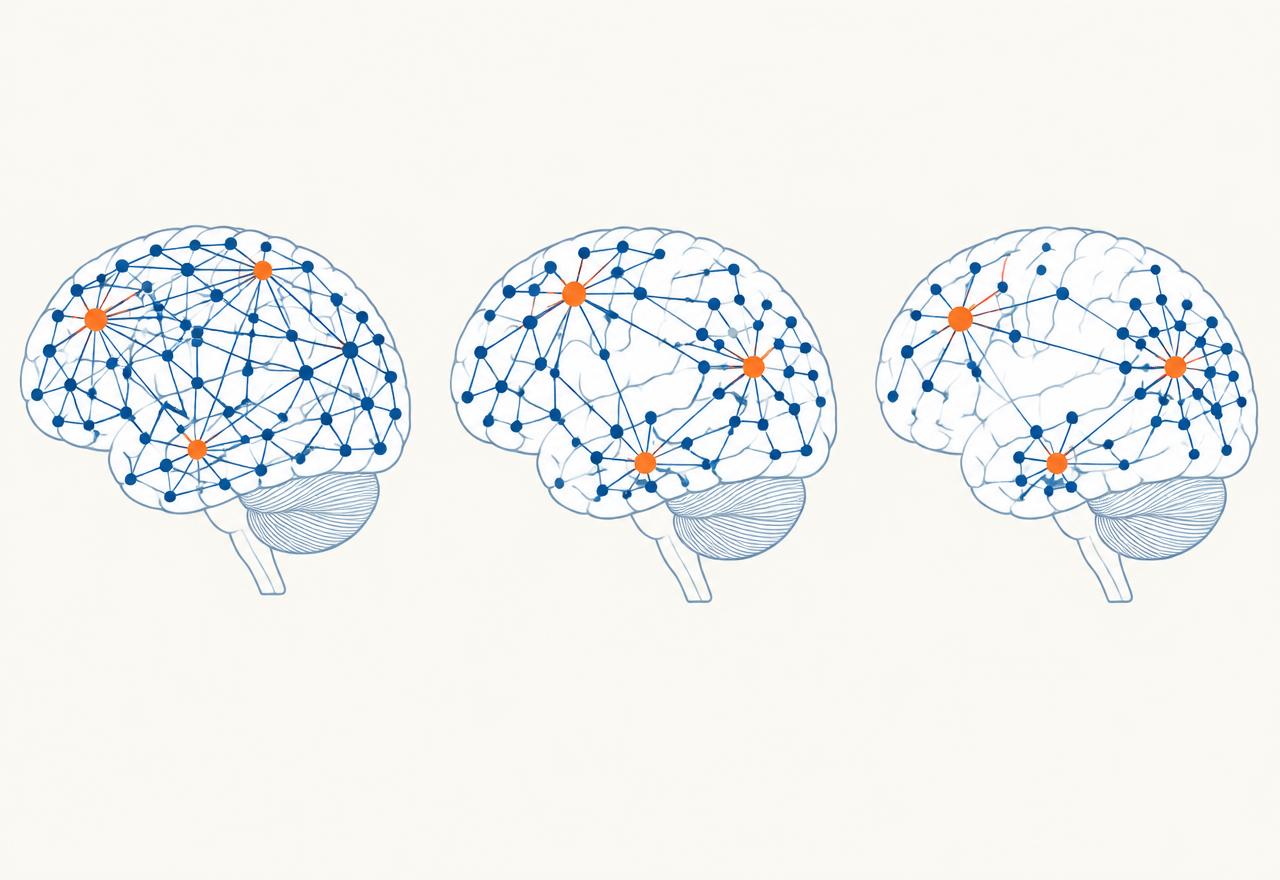
Conceptual illustration: How does our brain continue to support cognition as we age?
Conceptual illustration
Published research
01 · BRAIN NETWORKS & COGNITIVE AGEING

How does our brain continue to support cognition as we age?

Combining multimodal neuroimaging and network science, I study the changing organisation of the healthy ageing brain— its relationship to language and, in extenso, to cognitive flexibility. Our work suggests that the brain is not passively deteriorating with age. Instead, it is actively optimizing its circuitry, dynamically reallocating resources to adopt a new "cognitive mode". This mode supports a form of cognition more susceptible to exploit the knowledge accumulated throughout life.

Related work
Exploring Healthy Neurocognitive Ageing with Deep Learning Interpretability Methods
Preprint · 2026
Read preprint
MEG State Dynamics of Sentence Generation: Evidence for a Compensatory Segmentation Mechanism in Healthy Aging
Published · 2026
Read paper
Structure-function dynamics in healthy cognitive aging: A graph signal processing approach
Published · 2026
Read paper
Cognitive Flexibility and Brain Network Energy in Healthy Aging: An Allostatic Perspective from the SENECA model
Published · 2026
Read paper
Lifespan oscillatory dynamics in lexical production: A population-based MEG resting-state analysis
Published · 2025
Read paper
Midlife dynamics of white matter architecture in lexical production
Published · 2024
Read paper
Modeling the neurocognitive dynamics of language across the lifespan
Published · 2024
Read paper
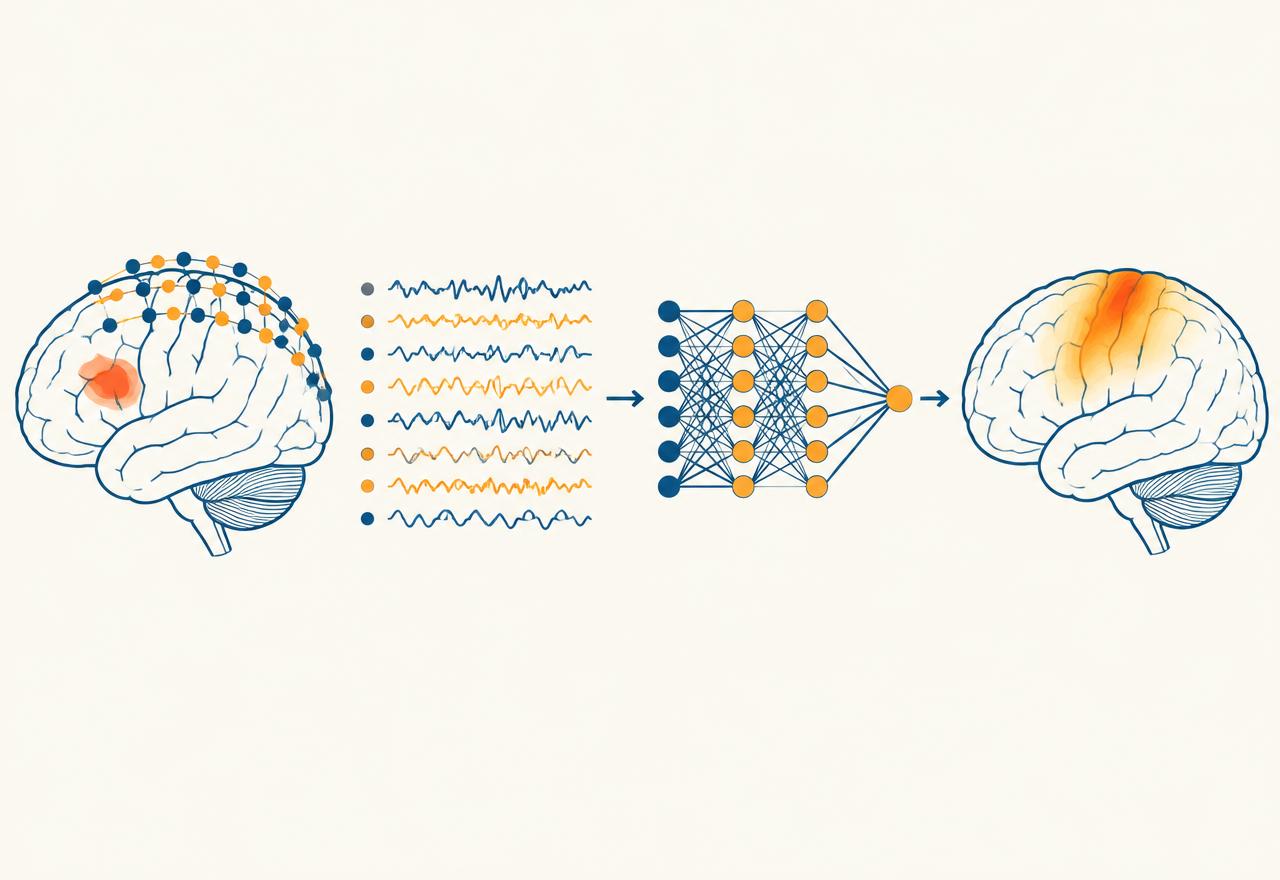
Conceptual illustration: Understanding the signals of recovery.
Conceptual illustration
Ongoing research
02 · NEUROIMAGING & ARTIFICIAL INTELLIGENCE

Understanding the signals of recovery.

Exploring interpretable deep learning and multimodal brain signals to investigate motor recovery after stroke within the BRAINSYNC programme.

Related work
Biologically informed deep learning reveals longitudinal fNIRS signatures of motor recovery after stroke
In preparation
Benchmarking temporal decoding models and attribution methods for cross-subject task-fMRI
In preparation
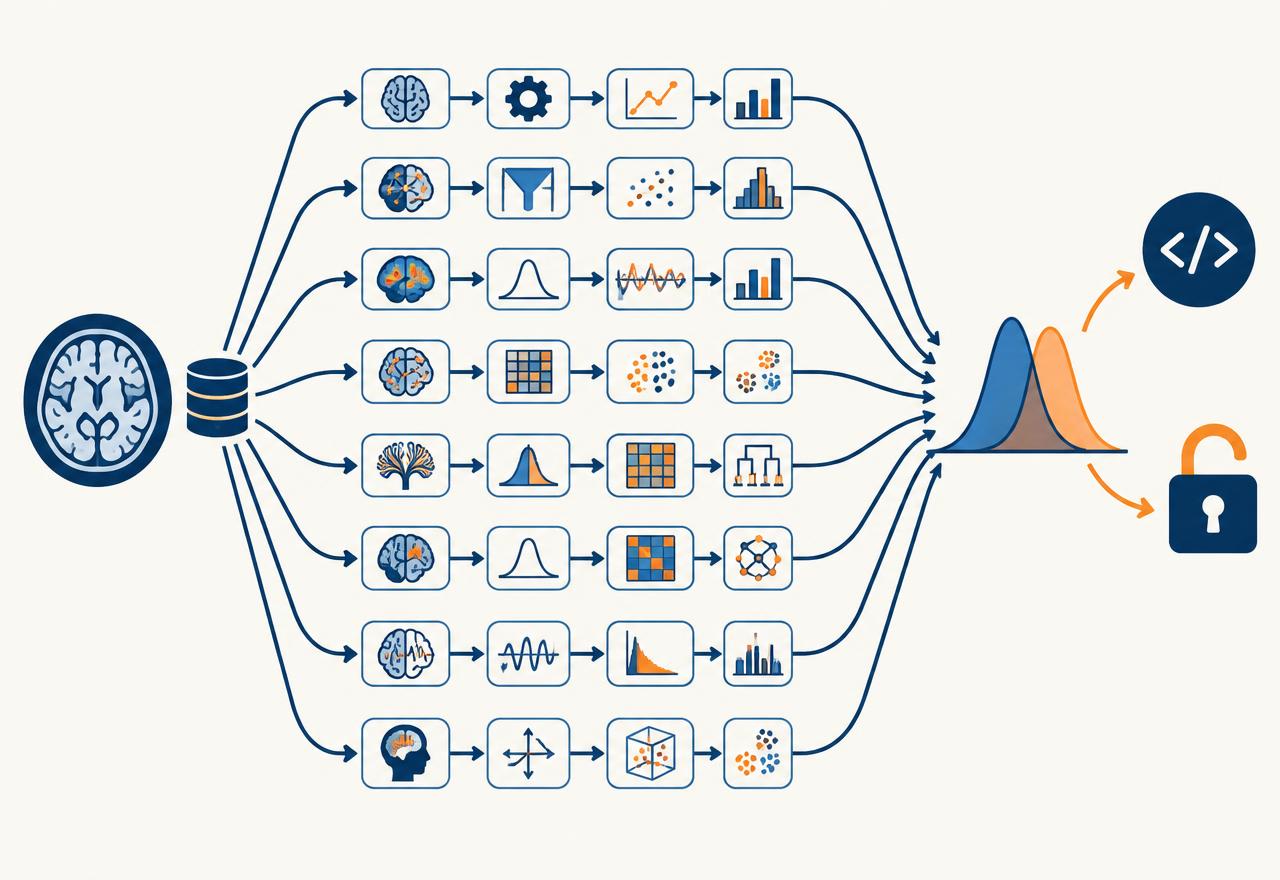
Conceptual illustration: Making neuroscience more reproducible.
Conceptual illustration
Software & collaboration
03 · OPEN & CREDIBLE SCIENCE

Making neuroscience more reproducible.

I contribute to collaborative investigations of analytical robustness with the Center for Open Science, develop open-source software and share neuroimaging data.

Related work

Investigating the analytical robustness of the social and behavioural sciences
Published · 2026
Read paper
At what sample size do correlations stabilize with unicorn and other improbable creatures?
Published · 2026
Read paper
Explore neurobalance